

%20(3).png)
Banks should generally buy mature, standard capabilities, build the workflows that create strategic differentiation or require precise operational control, and integrate or modernise where existing systems remain valuable.
That is the direct answer.
The difficult part is determining which category a proposed capability belongs to.
A new payment platform, reconciliation system, customer portal, approval workflow or operations dashboard may initially appear to present a simple choice:
- Build custom software
- Buy an existing platform
In practice, the strongest banking technology decisions rarely fit into such a clean binary.
A bank may buy proven infrastructure, build its customer and operational workflows, connect the solution to existing systems and retain parts of its current architecture.
The more useful question is therefore:
Which capabilities should the bank own, which should it procure, and which should it connect or modernise?
This shifts the discussion away from preferences about custom development and towards strategy, operating requirements, risk, resilience and long-term ownership.
Build and buy create different responsibilities
Buying software does not remove responsibility from the bank.
It changes the responsibility.
When a bank builds software, it accepts responsibility for:
- Product discovery
- Architecture
- Engineering
- Testing
- Security
- Deployment
- Maintenance
- Change management
- Operational support
- Future development
When a bank buys software, it accepts responsibility for:
- Vendor selection
- Due diligence
- Contract negotiation
- Implementation
- Configuration
- Integration
- Performance monitoring
- Third-party risk
- Data portability
- Exit planning
Current US banking guidance treats third-party risk management as a lifecycle covering planning, due diligence, contracting, ongoing monitoring and termination. It also states that risk-management practices should reflect the bank’s risk profile, complexity and the criticality of the activity supported by the provider.
Development is not a one-time responsibility either. The FFIEC’s current Development, Acquisition, and Maintenance guidance addresses planning, execution, governance, risk management, maintenance and change management for both internally developed and acquired technology.
Neither option allows the bank to hand over accountability completely.
The decision determines where accountability will sit.
Start with the capability, not the software category
A build-versus-buy discussion often begins too early.
A department identifies a need and immediately asks technology teams to compare products with development estimates.
But the bank may not yet have defined what it is trying to achieve.
Before evaluating a vendor or approving a build, the bank should answer:
- What business outcome is required?
- Which users are involved?
- What does the current workflow look like?
- Which controls must be enforced?
- What exceptions occur?
- Which systems must exchange information?
- What reporting is required?
- Which parts of the experience should be distinctive?
- Who will own the capability after launch?
- How will the bank measure success?
A bank that does not answer these questions may buy an impressive product that does not fit its operation.
It may also build a sophisticated custom platform for a process that could have been supported more efficiently by an established product.
The four realistic options
Banks should evaluate four options rather than two.
1. Buy
Purchase and configure an established product.
This is most appropriate when the capability is standard, mature and available from credible providers.
2. Build
Develop software around the bank’s specific workflow, operating model or customer proposition.
The software may be developed internally or with a specialist financial-product partner.
3. Buy and extend
Purchase a stable platform, then add custom interfaces, workflows, integrations or reporting around it.
This is often the most practical hybrid model.
4. Modernise and integrate
Retain an existing system while improving the interfaces, workflows, controls or connections surrounding it.
This can produce meaningful improvement without forcing a full replacement.
The decision should be made at the capability level, not for the entire technology estate.
A bank may buy identity infrastructure, build its onboarding workflow, integrate with its core system and modernise the operations console used by internal teams.
When buying banking software makes sense
Buying is usually the stronger option when the requirement is standard and the available product fits the bank’s important operational needs.
The capability does not create meaningful differentiation
Some systems are essential but do not determine why a customer chooses one bank over another.
Examples may include:
- Standard document management
- Internal communication tools
- Commodity infrastructure
- Common administrative systems
- Established reporting utilities
Building these capabilities may consume product and engineering capacity without strengthening the bank’s market position.
Buying allows internal teams to focus on the products and workflows where ownership creates more value.
Mature providers already solve the problem well
A purchased platform becomes attractive when:
- The functionality is well established.
- Several credible providers exist.
- The bank’s requirements closely match common industry needs.
- The provider has demonstrated operating experience.
- The product includes the necessary security and administration capabilities.
- The implementation does not require excessive modification.
The bank should examine more than the standard demonstration.
It should test how the product handles:
- Rejected transactions
- Failed payments
- Reversals
- Duplicate records
- Missing documentation
- Unusual approval paths
- Integration failures
- Operational investigations
- User-access changes
- End-of-day or month-end exceptions
The normal process may fit the product.
The exceptions often reveal whether it will fit the bank.
Speed matters more than uniqueness
Buying may accelerate delivery when a market opportunity, regulatory deadline or internal priority requires the bank to act quickly.
However, the bank should measure time to reliable adoption, not time to contract signature.
The full implementation may still require:
- Procurement
- Due diligence
- Legal review
- Security assessment
- Configuration
- Integration
- Data migration
- User acceptance testing
- Training
- Operational readiness
A product can be available immediately and still take significant work to place safely into operation.
The bank does not want to maintain the capability
Software ownership continues after launch.
If the bank does not want to maintain a permanent team for a particular capability, buying may be more appropriate.
The vendor then becomes responsible for much of the underlying product maintenance, while the bank retains responsibility for oversight, configuration, integration, adoption and risk management.
The process can accept standardisation
Buying works best when the bank is willing to adjust parts of its current workflow.
A common mistake is to buy a standard product and then demand that it replicate every historical process exactly.
That can produce a heavily customised platform that is expensive to maintain and difficult to upgrade.
Before requiring a modification, the bank should ask:
Is this requirement essential, or is it simply familiar?
When banks should build custom fintech software
Custom development becomes more attractive when the capability is strategically important, operationally distinctive or difficult to support through standard configuration.
The workflow creates competitive advantage
A bank may benefit from custom software when the workflow directly affects:
- Customer experience
- Product delivery
- Distribution
- Partner operations
- Internal execution speed
- Product flexibility
- Service quality
Examples could include:
- A distinctive digital onboarding experience
- A specialised lending workflow
- A proprietary agency-banking operation
- A unique corporate payments experience
- A partner distribution platform
- A custom collections process
- A specialised transaction-monitoring workflow
- A customer or merchant self-service portal
The bank does not need to build every underlying component.
It may use established infrastructure while owning the experience and orchestration that differentiate its product.
Standard software cannot support the operating model
A bank may have requirements involving:
- Multiple branches or entities
- Complex approval authorities
- Product-specific operating rules
- Regional differences
- Specialised reporting
- Unusual exception flows
- Distinct customer or partner roles
- Bespoke reconciliation structures
- Internal controls that exceed standard configuration
When the gap between the product and the workflow is too wide, the bank may end up operating workarounds outside the system.
Employees then use spreadsheets, emails and manual interventions to complete the process.
At that point, the purchased product may be creating the appearance of automation without delivering the complete operational workflow.
The bank requires precise control over permissions
Financial software often needs more than broad user roles.
The system may have to determine:
- Who can initiate an action
- Which accounts a user can access
- Which amount limits apply
- When additional approval is required
- Who can change transaction details
- Whether the requester can also approve
- Who may release a payment
- Which actions require maker-checker separation
- What evidence is mandatory
- Which reports each role can view
- How every significant action is recorded
A standard platform may offer role-based access while still being unable to represent the bank’s actual authority structure.
Custom development may be justified where these control requirements are central to the operation.
Integration is the real product problem
Banks frequently have capable systems that do not work together as one workflow.
The challenge may sit between:
- Core banking
- Payment processing
- Customer relationship management
- General ledger
- Identity management
- Compliance tools
- Data warehouses
- Reporting systems
- Internal operational applications
The valuable custom asset may therefore be an orchestration or integration layer rather than a complete replacement platform.
This layer can:
- Receive information from several systems
- Apply workflow rules
- Route decisions
- Trigger downstream actions
- Track status
- manage exceptions
- Preserve operational evidence
- Feed reconciled information into reporting
In this situation, “build” does not mean rebuilding banking infrastructure.
It means building the missing operational layer around it.
The capability must evolve continuously
Some systems are expected to change regularly as:
- Products evolve
- Transaction volumes grow
- Customer needs change
- New partners are introduced
- Internal policies change
- New channels are launched
- Regulatory requirements develop
Custom development provides greater control over the roadmap.
But the bank must be prepared to fund that roadmap.
A bank should not build because it wants flexibility while failing to establish:
- Product leadership
- Technical ownership
- Maintenance capacity
- Release management
- Security review
- Operational support
- User research
- Documentation
- Long-term budget
Ownership without an operating model becomes technical debt.
When a hybrid approach is better
For many banks, the best answer is:
Buy the mature foundation. Build the differentiating workflow. Integrate the complete operation.
Examples include:
- Buying identity-verification infrastructure while building the bank’s onboarding workflow
- Using an established payment rail while building approval, status and exception-management tools
- Retaining the core banking platform while creating a modern customer portal
- Buying a reporting platform while building a custom data-quality and reconciliation layer
- Using established cloud services while owning the banking applications deployed on them
- Buying a ledger while developing specialised product and operating rules around it
This avoids rebuilding mature infrastructure while allowing the bank to own the capabilities that matter most.
However, a hybrid model requires clear architectural boundaries.
The bank should define:
- Which component performs each function
- Which party owns each integration
- Where data is stored
- How incidents will be investigated
- Which system is the source of truth
- How components authenticate one another
- How failures are detected
- How the bank can replace one component later
Basel operational-resilience guidance emphasises coordination between business continuity, third-party dependency management, recovery and other risk frameworks supporting critical banking operations.
A hybrid system should reduce dependency concentration, not hide it behind more integrations.
The Flex Banking Capability Ownership Framework
Flex recommends evaluating each capability across four questions.
1. Is it standard?
Can established products support the requirement without significant compromise?
When the answer is yes, buying should receive strong consideration.
2. Is it differentiating?
Does the capability affect how the bank competes, serves customers or operates uniquely?
When the answer is yes, the bank may benefit from owning more of the workflow.
3. Is it connected?
Does the capability depend heavily on several existing systems, teams and data sources?
When the answer is yes, integration and orchestration may be more important than choosing a standalone product.
4. Is it still valuable?
Does the existing system continue to perform its core function despite weak interfaces, manual workflows or limited visibility?
When the answer is yes, modernisation may be more sensible than replacement.
This leads to a practical rule:
The framework should begin the discussion, not automatically decide it.
Ten criteria banks should evaluate
1. Strategic importance
Ask whether the capability is central to the bank’s strategy or merely necessary infrastructure.
A bank should be cautious about investing heavily in custom commodity systems.
It should also be cautious about placing a strategically important capability entirely on a vendor roadmap it cannot influence.
2. Workflow fit
Map the complete workflow before comparing products.
Include:
- Initiation
- Validation
- Approval
- Execution
- Notification
- Reconciliation
- Exception management
- Reporting
- Audit
- Support
Do not measure fit using feature counts alone.
A product may contain many features while failing at the specific point where the bank’s process becomes difficult.
3. Control requirements
Document:
- Roles
- Permissions
- Approval limits
- Segregation of duties
- Authentication
- Activity records
- Reporting access
- Data-retention requirements
- Administrative authority
The more specialised these controls are, the stronger the case for customisation or custom development.
4. Integration complexity
Identify every system that must send, receive or depend on information from the solution.
For each connection, define:
- Data ownership
- Data direction
- Frequency
- Format
- Authentication
- Error handling
- Monitoring
- Reconciliation
- Support ownership
- Expected volume
Integration complexity can change the economics of both building and buying.
5. Time to operational value
Compare the time required to reach stable, productive use.
For purchased software, include procurement, due diligence, configuration, integration and migration.
For custom development, include discovery, design, engineering, testing, security review, rollout and adoption.
The fastest option on paper may not be the fastest option in operation.
6. Total cost of ownership
For a purchased platform, include:
- Licence or subscription fees
- Implementation
- Configuration
- Integrations
- User licences
- Training
- Support
- Change requests
- Contract increases
- Vendor oversight
- Exit and migration
For custom software, include:
- Discovery
- Design
- Engineering
- Testing
- Infrastructure
- Security
- Documentation
- Maintenance
- Support
- Enhancements
- Technical-debt reduction
- Specialist talent
A fair comparison should cover the expected useful life of the system, not only the first implementation budget.
7. Internal capability
Building does not necessarily mean hiring a large permanent engineering team.
A bank may work with a specialist partner.
However, the bank still needs internal owners who can:
- Define priorities
- Approve requirements
- Make risk decisions
- Coordinate stakeholders
- Accept releases
- Own the business outcome
A bank should not outsource its understanding of the product.
8. Third-party dependency
A purchased platform may introduce dependency on:
- Vendor performance
- Vendor pricing
- Vendor product direction
- Vendor security
- Vendor infrastructure
- Vendor integration priorities
- Vendor financial stability
Current Basel third-party risk principles support a risk-based approach reflecting the criticality of third-party arrangements and the bank’s operating context.
This does not mean third parties should be avoided.
It means dependency must be understood and managed deliberately.
9. Resilience and exit options
The bank should determine:
- What happens during an outage
- How service will be restored
- Whether an alternative process exists
- How data can be retrieved
- How the service can be migrated
- Whether the bank can continue operating during provider disruption
- How long replacement would take
- Which knowledge must remain inside the bank
These questions apply to both bought and custom systems.
A custom system can also become dependent on its original developers if knowledge transfer and documentation are weak.
10. Post-launch ownership
Every project needs a named product owner after launch.
For purchased software, someone must own:
- Vendor performance
- Configuration
- Adoption
- Service issues
- Change requests
- Internal controls
For custom software, someone must own:
- Product roadmap
- Prioritisation
- Maintenance
- User feedback
- Release decisions
- Operational outcomes
A system without clear ownership gradually becomes difficult to improve.
The hidden risks of buying
Buying is often described as the lower-risk choice.
It can be, but it creates its own risks.
Buying based on a feature demonstration
Demonstrations usually show the cleanest version of the workflow.
The bank should require the vendor to demonstrate difficult scenarios using realistic requirements.
Excessive customisation
If a product requires extensive modification, the bank may inherit the limitations of a purchased platform and the complexity of custom software at the same time.
Vendor lock-in
Lock-in may arise through:
- Proprietary data formats
- Limited API access
- Contract terms
- Custom configurations
- Difficult migration
- Provider-controlled integrations
- Dependence on specialist vendor knowledge
The bank should evaluate exit before entry.
Fragmentation
Buying several strong products does not automatically produce one strong operating workflow.
The bank may still need to build the connections, operational views and exception processes between them.
Roadmap dependency
A feature that matters greatly to the bank may remain a low priority for the vendor.
The bank must understand which changes it can configure, which it can commission and which depend entirely on the vendor’s roadmap.
The hidden risks of building
Building custom software can provide control, but it is not automatically the more strategic decision.
Building without product discovery
A poorly defined custom project may simply digitise an inefficient process.
Treating every preference as a requirement
Custom development should not become a method for preserving every departmental habit.
Requirements must be prioritised against the business outcome.
Underestimating maintenance
The initial release is only the beginning.
Security patches, infrastructure changes, defects, user needs and new integrations continue after launch.
Weak internal ownership
A specialist partner can design and build the system.
It cannot replace the bank’s responsibility for product direction and business decisions.
Building a monolith
A system that tries to solve every problem at once may become difficult to release, test and change.
A modular approach allows the bank to improve and replace individual components more safely.
Four common banking scenarios
Scenario 1: Internal payment approval workflow
The bank already has reliable payment execution infrastructure.
The operational gap is that requests, approvals, documentation and status updates are fragmented.
Replacing the payment infrastructure may be unnecessary.
Likely direction: Build or configure a workflow layer connected to the existing payment systems.
Scenario 2: Standard document-management requirement
The bank needs controlled document storage, retrieval and administration.
Several mature platforms meet the requirement.
Likely direction: Buy and configure unless the bank has genuinely unusual needs.
Scenario 3: Distinctive digital banking product
The bank wants a differentiated customer journey, specialised product rules and continuous roadmap control.
Building every infrastructure component would delay the project.
Likely direction: Buy mature infrastructure and build the differentiated product, workflow and experience layers.
Scenario 4: Legacy operations platform
The existing system performs its core function but creates manual work around reporting, approvals and integrations.
A full replacement would introduce substantial disruption.
Likely direction: Modernise the surrounding workflows and interfaces before considering replacement.
How banks should make the decision
Step 1: Define the business outcome
State what should improve in measurable operational terms.
Examples:
- Reduce approval time
- Improve transaction visibility
- Shorten reconciliation cycles
- Launch a new product
- Reduce manual interventions
- Improve customer self-service
- Support additional transaction volume
Step 2: Map the current workflow
Document the users, systems, decisions, exceptions and control points.
Step 3: Separate essential requirements from preferences
Not every current step should survive.
Step 4: Assess the four delivery options
Compare buy, build, buy-and-extend, and modernise-and-integrate.
Step 5: Model the full lifecycle
Include implementation, operation, maintenance, change and exit.
Step 6: Complete security, risk and compliance review
The requirements will vary by jurisdiction, activity and criticality.
Step 7: Define post-launch ownership
Name the accountable product, technology and operational owners.
Step 8: Pilot the difficult workflow
Do not test only the standard transaction.
Test the exceptions, reversals, access changes and integration failures.
What to look for in a custom fintech software partner
A bank should evaluate more than engineering capability.
The partner should understand:
- Financial workflows
- Money movement
- Approval hierarchies
- Reconciliation
- Exception management
- Role-based access
- Audit trails
- Reporting
- System integrations
- Operational support
- Regulated stakeholder collaboration
The partner should also be willing to recommend buying or integrating when a custom build is unnecessary.
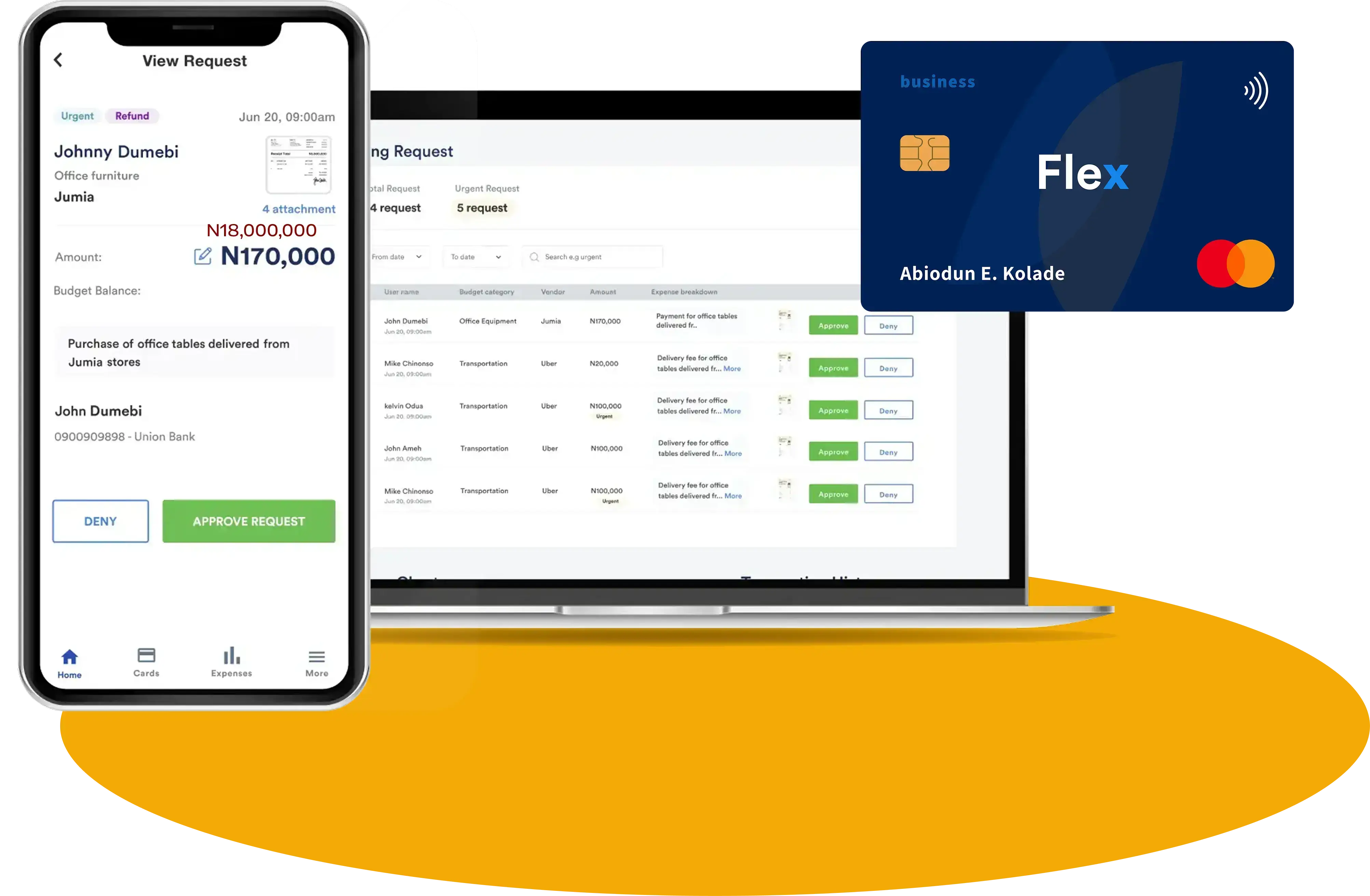
Flex Enterprise Solutions works with banks and other finance-heavy organisations to build software for payments, approvals, reconciliation, reporting, operational dashboards, customer portals, integrations and legacy-system modernisation. Flex’s delivery process begins with discovery and workflow mapping before architecture and development are defined.
That workflow-first approach matters because the objective should not be to build the largest possible platform.
It should be to create the smallest complete system capable of delivering the required operational outcome.
The correct answer is the one the bank can operate
Buy when the capability is mature, standard and adequately supported by an established platform.
Build when the capability is differentiating, operationally distinctive or requires a level of control standard products cannot support cleanly.
Buy and extend when proven infrastructure can support a custom product or workflow layer.
Modernise and integrate when the existing system remains valuable, but the surrounding operation needs better visibility, usability or control.
The best technology decision is not the one with the lowest initial price, the most features or the greatest degree of customisation.
It is the one the bank can govern, integrate, operate, maintain and improve over time.
Frequently Asked Questions
Should banks build or buy fintech software?
Banks should usually buy mature, standard capabilities and build software where the workflow creates strategic differentiation, requires specialised controls or cannot be supported effectively through standard configuration. Many banks will benefit from a hybrid model combining purchased infrastructure with custom workflows and integrations.
Is custom fintech software always better than an off-the-shelf platform?
No. Custom software is appropriate only when the bank’s requirements justify the cost and long-term ownership responsibility. An established platform may be better for standard capabilities that do not differentiate the bank and are already supported by a mature provider market.
When should a bank build custom banking software?
A bank should consider building when the capability is strategically important, the workflow is genuinely distinctive, integrations are complex, control requirements are highly specific or the bank needs long-term ownership of the roadmap.
When should a bank buy banking software?
Buying is usually appropriate when the capability is standard, the available products fit the important workflow requirements, implementation speed matters and the bank does not want to maintain the underlying capability internally.
What is a hybrid build-and-buy model?
A hybrid model uses an established platform or infrastructure for standard capabilities while the bank builds custom workflows, interfaces, integrations or customer experiences around it. This can reduce development time while preserving control over strategically important areas.
How should a bank calculate the cost of building versus buying?
The comparison should include the full lifecycle. For purchased software, this includes licences, implementation, configuration, integration, support, vendor oversight and exit. For custom software, it includes discovery, development, infrastructure, security, maintenance, support and future enhancements.
Does buying software remove third-party risk?
No. Buying introduces third-party dependencies that the bank must assess and manage throughout planning, due diligence, contracting, monitoring and termination. The level of oversight should reflect the importance of the service and the risk it presents to the bank.
Can a bank modernise a legacy system without replacing it?
Yes. A bank may retain a functioning legacy system while adding modern interfaces, workflow automation, integrations, reporting or operational dashboards around it. This can improve performance and user experience without the disruption of immediate full replacement.
Can Flex work with a bank’s existing systems?
Yes. Flex designs around existing banking, ERP, accounting, reporting and internal systems where appropriate. A project may involve building a new workflow, integrating existing platforms, modernising part of the architecture or developing a purpose-built financial application.
How does a custom fintech software project begin?
A strong project begins with discovery and workflow mapping. The bank should define its business outcome, users, current process, approval rules, systems, exceptions, integrations, security requirements, reporting needs and post-launch ownership before the development scope is finalised.
Deciding whether to build, buy or integrate?
Flex Enterprise Solutions can work with your bank’s product, operations, technology, finance, security and compliance teams to map the proposed workflow and determine the most appropriate delivery model.
The outcome may be:
- A custom financial product
- A workflow built around existing infrastructure
- An integration layer
- A modernised legacy process
- A purchased platform with custom extensions
- A recommendation not to build
Evaluate Our Build-or-Buy Decision
Share this post





.png)