

.png)
The safest way to digitize a critical finance workflow is usually not to replace everything at once.
Start by understanding the live process. Decide what must remain stable. Digitize one controlled part of the workflow, connect it to the systems already in use, test it against real operating conditions and move responsibility only when the new process has proved that it can carry the work.
This matters because finance transformation has an unusual constraint.
The organisation wants change, but the money still has to move.
Suppliers still need to be paid. Customers still need service. Approvals still need to happen. Accounts still need to reconcile. Management still needs reports. Regulatory and audit responsibilities do not disappear while a new system is being implemented.
The objective is therefore not simply to digitize a process.
It is to change the process without losing control of the operation underneath it.
For banks, insurers and large enterprises across Africa, this is becoming increasingly important as financial infrastructure itself becomes more interconnected. Nigeria's current Payments System Vision 2028 is built around interoperability, security, innovation and regional integration. South Africa is simultaneously modernizing important payment infrastructure while explicitly seeking to preserve operational stability during the transition.
The lesson for an individual organisation is similar:
Modernization and continuity have to be designed together.
Why finance digitization projects cause disruption
A finance workflow rarely exists in isolation.
Consider a supplier payment.
What appears to be one process may involve:
- A department requesting expenditure
- Budget verification
- One or several approvals
- Vendor validation
- Payment preparation
- Banking infrastructure
- Notifications
- Supporting documents
- Accounting entries
- Reconciliation
- Management reporting
- Exception handling
Some of those activities may happen inside an ERP.
Others may happen through spreadsheets, email, messaging applications, banking platforms and the institutional knowledge of individual employees.
The danger is assuming that the visible process is the whole process.
A new application may successfully replace the request form while failing to account for how finance resolves a rejected payment.
It may automate approval routing but make it harder to deal with an emergency exception.
It may connect to the ERP but overlook the spreadsheet finance uses to reconcile transactions at the end of each day.
The software can work exactly as designed while the operation becomes more difficult.
That is why the first stage of finance digitization should not be development.
It should be discovery.
Start by finding the real workflow
Process documentation often describes how a workflow is supposed to operate.
The system needs to reflect how it actually operates.
That requires understanding:
- Who initiates the process
- Which information is required
- Who approves what
- What determines approval limits
- Which systems participate
- Which data is entered more than once
- Where employees leave the formal process
- What documents are required
- What happens when something goes wrong
- Who resolves each exception
- Which reports depend on the workflow
- Which controls must remain intact
The most valuable questions are often about exceptions.
Ask:
What happens when the normal process fails?
What happens when the vendor account changes?
When a payment fails?
When the amount changes after approval?
When an approver is unavailable?
When the bank connection times out?
When a receipt is missing?
When a transaction appears in the bank but not in the ERP?
When a customer, branch or department disputes the status?
Those answers reveal the workflow that needs to be digitized.
The Flex Continuity-First Digitization Framework
For finance-heavy operations, Flex uses a useful way of thinking about transformation:
Map → Ring-fence → Connect → Shadow → Reconcile → Cut over → Stabilize
The important point is that the system does not inherit responsibility for the entire operation on day one.
Responsibility moves in stages.
1. Map: understand the complete transaction journey
Before changing the workflow, map one transaction from beginning to end.
Do not stop at payment.
Follow it through:
Request → decision → execution → confirmation → evidence → reconciliation → accounting → reporting
Identify every person and system touched along the way.
Then identify where information is:
- Re-entered
- Exported
- Copied
- Approved
- Corrected
- Reconciled
- Stored
- Escalated
This exposes the actual cost and complexity of the current process.
It also prevents the organisation from digitizing only the visible front end while preserving the same manual work behind it.
2. Ring-fence: decide what must not change yet
A good transformation programme is partly defined by what it deliberately leaves alone.
An organisation may have:
- A reliable core banking system
- An established ERP
- Existing payment rails
- A functioning accounting platform
- Proven settlement infrastructure
- A reporting warehouse
If those systems perform their core roles adequately, replacing them simply because another part of the workflow is weak can multiply the project risk.
Instead, define the boundary.
For example:
We are replacing payment requests, approvals and status tracking. Payment execution remains on the current banking infrastructure. Accounting remains in the ERP.
That boundary makes the project easier to understand, test and govern.
It also provides a clear answer when employees ask:
What exactly is changing?
3. Connect: build around the systems that already work
Digitization does not require every activity to move into one enormous application.
Often, the better architecture is a workflow layer connecting the systems already performing specialised functions.
A finance workflow may connect to:
- Core banking platforms
- Banking APIs
- ERP systems
- Accounting software
- Identity providers
- Payment processors
- Mobile-money providers
- Procurement systems
- Customer or partner databases
- Reporting tools
The objective is to reduce manual movement between these systems.
Instead of finance exporting transactions from one platform and uploading them to another, the systems should exchange the appropriate information automatically wherever technically and operationally sensible.
This is particularly relevant in African financial services, where institutions increasingly operate through ecosystems of technology providers rather than a single technology stack. In a Central Bank of Kenya survey, all surveyed commercial and microfinance banks reported using third-party technology providers; commercial banks commonly relied on them for cloud, mobile-banking and internet-banking services.
The implication is important:
The quality of the connections between systems can matter as much as the quality of the individual systems.
4. Shadow: prove the new workflow before making it authoritative
One of the safest ways to introduce a new financial process is to let it observe or reproduce part of the current workflow before it becomes the official system of action.
This is different from asking employees to operate two complete systems indefinitely.
A prolonged dual process creates:
- Duplicate work
- Conflicting records
- User frustration
- Unclear ownership
- Additional reconciliation
Instead, use a controlled shadow period.
For example, the existing system may continue to execute payments while the new workflow independently receives the transaction information, applies its status logic and produces the expected records.
The team can then compare:
- Transaction counts
- Amounts
- Approval outcomes
- Status changes
- Exceptions
- Reporting
- Accounting outputs
The question is not simply whether the application runs.
It is:
Does the new workflow produce the same operational truth the organisation needs to run safely?
5. Reconcile: require evidence before Cutover
Before responsibility moves to the new system, establish a reconciliation gate.
The organisation should be able to demonstrate that important outputs from the new process correspond to the existing source records.
Depending on the workflow, that could mean checking:
- Requested versus approved amounts
- Approved versus paid transactions
- Payment status
- Bank records
- Ledger entries
- Customer or vendor balances
- Supporting documentation
- Outstanding exceptions
This gives the project an objective cutover condition.
Instead of:
The system looks ready.
The decision becomes:
The system processed the agreed test population and the results reconciled within the approved tolerance.
For finance systems, that difference matters.
6. Cutover: Move ownership in a controlled window
A cutover should specify more than a date.
It should establish:
- Which transactions move to the new workflow
- What happens to transactions already in progress
- Which system becomes authoritative
- Who can approve the transition
- Which reports should be monitored
- Which teams are on standby
- What triggers rollback
- How users will report problems
- How exceptions will be managed
Avoid creating a period where two systems can independently initiate the same financial action.
At each stage, there should be a clear system of record and a clear system of action.
Users should know which one governs the transaction.
7. Stabilize: treat the first weeks as part of implementation
Going live is not the end of a finance transformation project.
It is the beginning of operating the new process under real conditions.
The first weeks reveal behaviours that test environments rarely reproduce perfectly:
- Different user habits
- Peak transaction volumes
- Unusual approval combinations
- Poor data from upstream systems
- Delayed provider responses
- Rare transaction types
- New exception patterns
Track these deliberately.
A stabilization dashboard should monitor measures such as:
- Successful transaction rate
- Failed transaction rate
- Approval time
- Unresolved exceptions
- Reconciliation differences
- Integration failures
- Manual interventions
- Support requests
- User adoption
The implementation team should remain available until those indicators settle into an acceptable operating range.
Do not digitize a bad process unchanged
A common mistake in finance transformation is treating every current step as a requirement.
If a payment currently requires four approvals, a new application may be configured with four approvals without anyone asking why they exist.
If finance currently copies information between three spreadsheets, the project team may reproduce three separate digital screens.
That is digitization without redesign.
Before automating a step, ask:
- Does this control still serve a purpose?
- Is the same check happening somewhere else?
- Does this information already exist in another system?
- Does every transaction need this approval?
- Can rules handle routine cases while people review exceptions?
- Is this report still used?
- Is this process required or merely inherited?
Good digitization removes unnecessary work before automating what remains.
Design the exception workflow before the perfect workflow
Project teams naturally spend most of their time designing the normal path.
Request submitted.
Approval received.
Payment successful.
Transaction recorded.
But finance departments often spend disproportionate amounts of time on everything that does not follow the normal path.
The new system therefore needs to answer:
What happens when it does not work?
Every significant exception should have:
- A status
- An owner
- A reason
- Supporting information
- A next action
- An escalation path
- A history
- A resolution
A payment marked simply as “failed” is not enough.
Operations may need to know:
- Why it failed
- Whether funds moved
- Whether it can be retried
- Whether approval is still valid
- Whether the recipient should be contacted
- Whether accounting entries need to be reversed
- Whether the transaction has already been reconciled
That operational depth is what separates a digitized interface from a complete financial workflow.
Keep controls inside the workflow
A new system should reduce the number of controls employees have to remember manually.
Depending on the process, the workflow may enforce:
- Approval thresholds
- Segregation of duties
- Required documentation
- User permissions
- Department or branch access
- Transaction limits
- Escalation paths
- Change histories
- Maker-checker rules
The goal is not to add more bureaucracy.
It is to make the approved operating policy part of how the system works.
This reduces dependence on employees remembering which rule applies in each situation.
Do not leave reconciliation until the end
Many transformation projects treat reconciliation as a finance requirement to solve after the new transaction process is working.
That creates avoidable problems.
The project should determine from the beginning:
- What is being reconciled
- Which system is authoritative
- Which identifiers connect the records
- When matching takes place
- Which differences are acceptable
- How exceptions are assigned
- What evidence is retained
- When a transaction is considered complete
If the system cannot explain what happened to a transaction after execution, the workflow is not finished.
Plan for third-party failure
As finance operations become more connected, organisations depend on providers they do not directly control.
A workflow may rely on:
- Cloud infrastructure
- Payment providers
- Banking APIs
- SMS or email services
- Identity providers
- Credit bureaus
- ERP vendors
- Mobile-money infrastructure
The project should therefore define what happens when one dependency is unavailable.
The Central Bank of Kenya's survey of third-party technology providers found that 83% of surveyed institutions reported having a formal incident-response plan for third-party breaches or failures, while most surveyed commercial banks also incorporated third parties into business-continuity arrangements.
A digitized workflow should be designed with the same question:
Can the operation continue, recover or fail safely when one dependency is unavailable?
Avoid the big-bang temptation
Large replacement programmes can be appropriate.
But they should not be the default definition of transformation.
A bank may not need a new core system to improve reconciliation.
An insurer may not need a new ERP to digitize claims approvals.
A large enterprise may not need to replace its accounting software to automate disbursements.
A financial institution may not need to replace its payment provider to improve transaction visibility.
Sometimes the highest-value intervention is a smaller layer that fixes the process between the existing systems.
South Africa's current national payments modernization provides a useful illustration at infrastructure level: SARB says it is enhancing existing settlement systems to maintain operational stability and reliability during the transition while new systems are developed.
The same principle can apply inside an organisation:
Preserve what must remain reliable while modernizing what is holding the process back.
How the approach changes across key African markets
The basic continuity principles remain the same, but implementation requirements differ by market.
Nigeria
Nigeria's Payments System Vision 2028 prioritizes interoperability, security, innovation and broader regional integration.
For institutions operating there, workflow digitization should consider how new systems interact with existing payment infrastructure and how transaction status, approvals, reconciliation and exceptions remain visible across those connections.
A Nigerian institution may therefore get more value from digitizing the operational layer around existing payment infrastructure than from replacing that infrastructure itself.
South Africa
South Africa's current payments modernization programme places significant emphasis on infrastructure modernization, interoperability, reliability and resilience.
For larger institutions, this strengthens the case for staged implementations with clear architecture boundaries, continuity plans and integration ownership.
Kenya
Kenyan banks already operate with substantial third-party technology dependencies. CBK's sector research shows banks using external providers across key technology functions, which makes vendor governance, integration monitoring and incident response important parts of digitization—not matters to consider only after launch.
Ghana
For Ghanaian institutions, the same approach should be applied to workflows involving banks, payment providers, mobile-money infrastructure and internal financial systems: keep the systems that perform their roles effectively, then digitize the manual coordination, control and reconciliation between them.
A practical example: digitising a payment approval workflow
Consider an enterprise that currently manages supplier payments like this:
A department sends a payment request by email.
Finance copies it into a spreadsheet.
The request moves between managers for approval.
Finance logs into the bank to make the payment.
The payment reference is copied back into the spreadsheet.
The invoice sits in a shared folder.
The transaction is eventually entered into accounting and reconciled.
A disruptive transformation would attempt to replace the entire process and its underlying systems simultaneously.
A continuity-first transformation could work differently.
Phase one: digitize the request
Employees submit payment requests through a controlled portal.
The existing payment and accounting systems remain unchanged.
Phase two: move approvals into the workflow
Approval rules, limits, supporting documents and decision history become part of the application.
Phase three: connect payment execution
Once approved, the workflow sends the appropriate instruction to the existing banking or payment infrastructure.
Phase four: return payment status automatically
Finance no longer has to manually update the spreadsheet.
Phase five: connect reconciliation and accounting
Completed transactions and supporting information flow into the systems responsible for financial records.
At every stage, the organisation receives operational value without waiting for a complete replacement programme.
Where Flex Enterprise Solutions fits
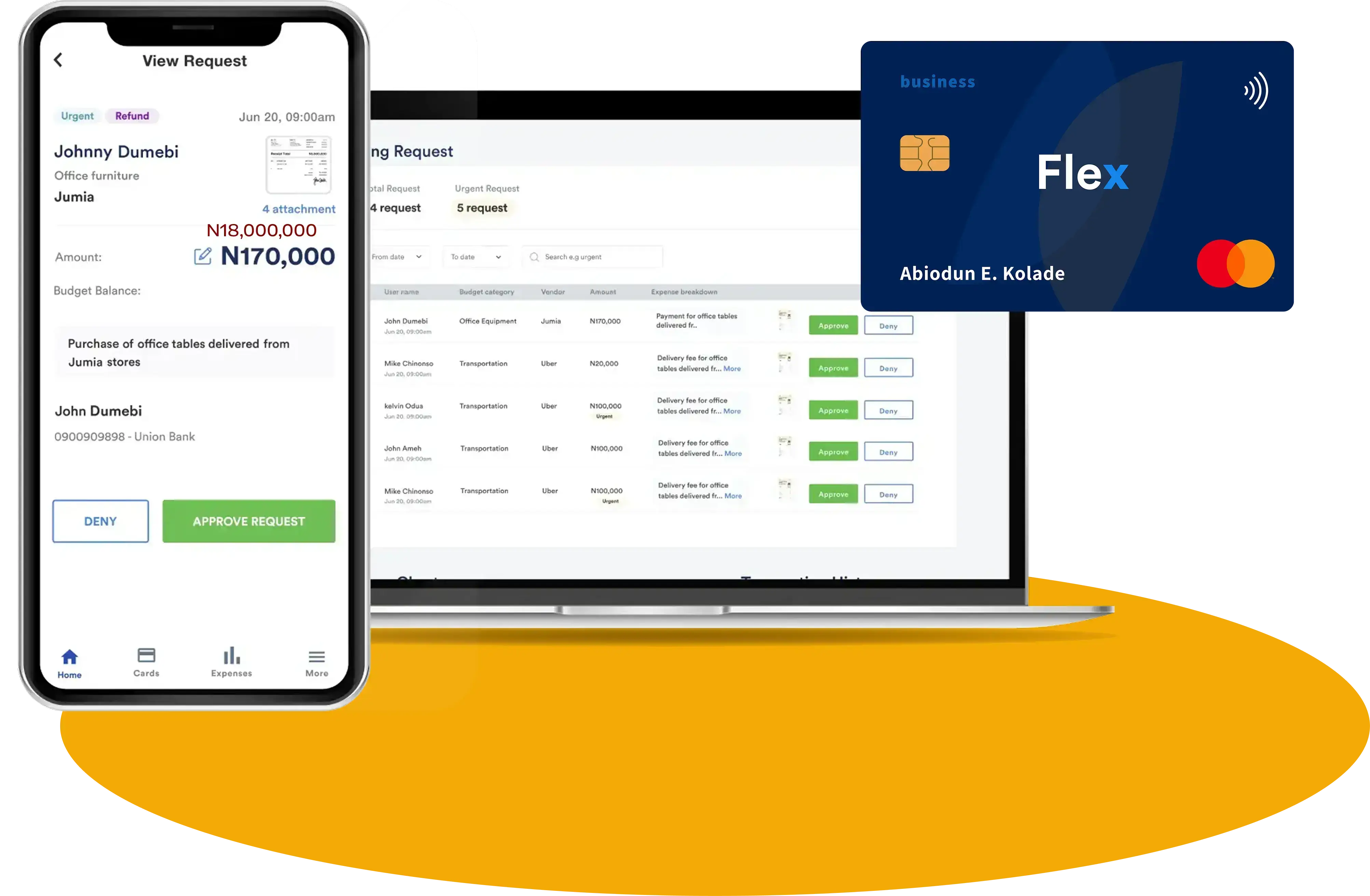
Flex Enterprise Solutions is designed for organisations where finance workflows have become too important or too complex to remain spread across manual approvals, spreadsheets, disconnected systems and repeated follow-ups.
Flex builds custom systems for areas including:
- Payment workflows
- Approval and disbursement systems
- Reconciliation and reporting
- Finance operations dashboards
- Customer and partner portals
- Legacy-system modernization
- ERP, banking and finance integrations
The focus is on building around the organisation's process and connecting existing systems where appropriate rather than forcing unnecessary replacement. Flex describes its enterprise approach as digitizing finance-heavy workflows while maintaining visibility and control.
That matters because finance transformation should not be measured by how much software was replaced.
It should be measured by how much better the operation works afterward.
The goal is not a paperless process
Finance digitisation is sometimes described as replacing paper, spreadsheets or email.
That is too narrow.
A finance workflow has been successfully digitized when the organisation can answer, without reconstructing the process manually:
- What is happening?
- Who owns it?
- Who approved it?
- What happened next?
- What system executed it?
- What evidence supports it?
- Has it been reconciled?
- What needs attention now?
The best transformation is often almost uneventful to the wider organisation.
The workflow becomes faster.
Information becomes easier to find.
Exceptions become visible.
Controls become more consistent.
Systems exchange more information automatically.
And the business continues operating while the change happens.
That is the standard finance digitization should aim for.
Frequently Asked Questions
What is finance workflow digitization?
Finance workflow digitization means moving a financial process from manual or fragmented steps into a structured digital workflow. This may include requests, approvals, payments, reconciliation, documentation, reporting and integrations between financial systems.
How can a company digitize finance processes without interrupting operations?
Start with the existing workflow, define which systems must remain stable, digitize one controlled part at a time, test the new workflow against live operating conditions, reconcile its outputs and move responsibility only after the process has been proven.
Do we need to replace our ERP to automate finance workflows?
Not necessarily. Many finance workflows can be digitized around an existing ERP through workflow applications and integrations. If the ERP continues performing its accounting or enterprise role effectively, replacing it may create unnecessary cost and disruption.
Should old and new finance systems run in parallel?
A limited shadow or parallel-validation period can reduce migration risk, but organisations should avoid operating two complete authoritative processes for long periods. The transition should always identify which system is responsible for each transaction and when authority moves to the new workflow.
Which finance process should be digitized first?
A good starting point is a workflow with significant manual coordination, measurable delays, repeated data entry or poor visibility, but with a scope narrow enough to change safely. Payment approvals, reconciliation, disbursements and finance reporting are common candidates.
How do you migrate a finance workflow from spreadsheets?
First determine what the spreadsheet is doing: analysis, record keeping, approval coordination, reconciliation or system integration. Then preserve the functions that still belong in a spreadsheet and move workflow, permissions, transaction history, controls and integrations into a structured system.
How should banks digitize legacy finance operations?
Banks should map critical dependencies before making changes, separate systems that remain reliable from processes that need improvement, introduce new capabilities in controlled stages and test operational resilience, integrations and reconciliation before cutover.
Can finance workflow automation work with existing banking and accounting systems?
Yes, where those systems provide suitable integration methods. A workflow layer can often connect to banking, ERP, accounting, reporting and internal applications rather than replacing them. The exact integration approach depends on the systems involved.
How does Flex help digitize finance workflows?
Flex Enterprise Solutions maps the existing workflow and can build payment, approval, reconciliation, reporting, portal and integration systems around an organisation's operating requirements. The project may involve building a new workflow, modernizing part of a legacy process or connecting systems the organisation already uses.
How long does finance workflow digitization take?
There is no standard timeline. A focused workflow with limited integrations can be implemented much faster than a multi-system transformation. The duration depends on workflow complexity, integrations, data migration, security review, testing, stakeholder availability and rollout requirements.
Share this post





.png)


.png)